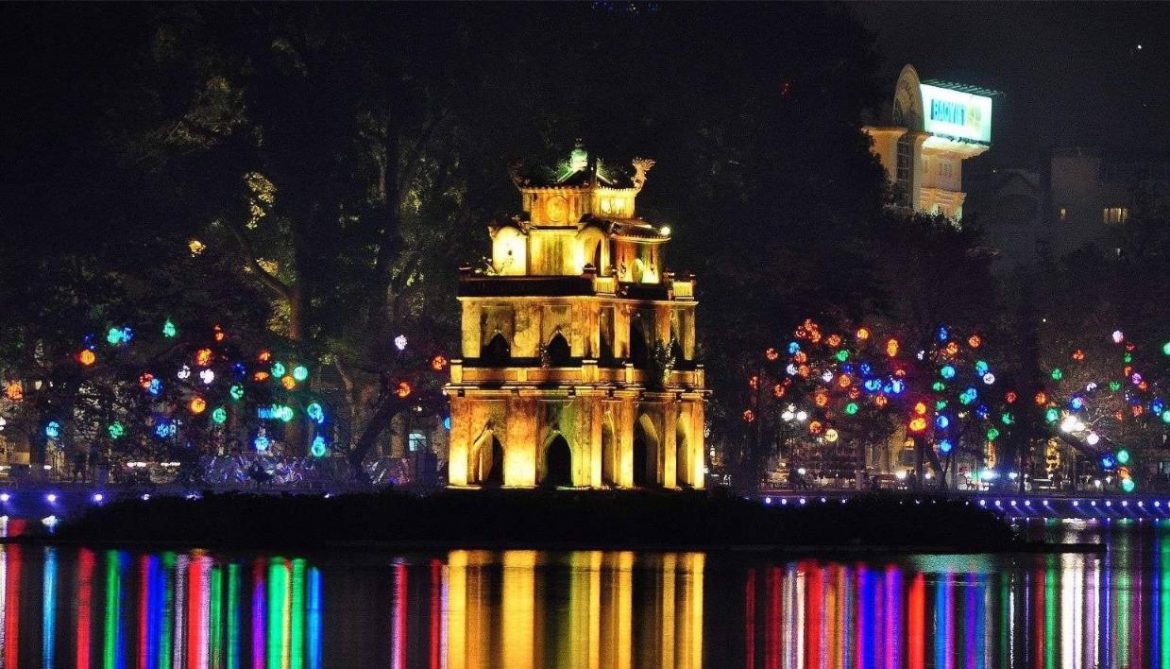
Hanoi, a city brimming with charm and culture, offers countless treasures for travelers to explore. Among its most celebrated landmarks is Ngoc Son Temple, an iconic spiritual site nestled on a tranquil islet in the heart of Hoan Kiem Lake. This historical and cultural gem is not only a place of worship but also a symbol of Vietnam’s proud heritage. Let’s uncover the timeless allure of Ngoc Son Temple and everything it has to offer.
1. Introduction to Ngoc Son Temple
Ngoc Son Temple, or the Temple of the Jade Mountain, is one of Hanoi’s most picturesque and spiritually significant landmarks. Constructed in the 19th century, the temple pays homage to several revered figures, including General Tran Hung Dao, who is celebrated for his role in defeating the Mongols in the 13th century.
Surrounded by the calm waters of Hoan Kiem Lake, the temple is steeped in legends. The lake itself is tied to the tale of Emperor Le Loi and his magical sword, which was returned to a golden turtle spirit in these very waters. This blend of mythology, history, and serene beauty makes Ngoc Son Temple a must-visit for anyone seeking to experience the essence of Hanoi’s cultural heritage.

2. What to See at Ngoc Son Temple Hanoi
Ngoc Son Temple Hanoi is more than just a single structure; it is a harmonious composition of symbolic architecture, natural beauty, and spiritual sanctity. Each element tells a story, offering visitors an enriching experience.
2.1 The Pen Tower (Tháp Bút) and Ink Slab (Đài Nghiên)
Stopping at the entrance of Ngoc Son Temple, you will encounter the striking image of a five-story stone tower with an impressive design – the Pen Tower. Built in 1865, this tower is located on Jade Mountain (Ngọc Bội). Inscribed on the tower are the words “Tả Thanh Thiên” (“Write on the Blue Sky”), a poetic expression of intellectual aspiration.
Adjacent to the tower is the Ink Slab (Đài Nghiên), perched atop three frog-like creatures. Together, these structures emphasize the value of learning and reflect Vietnam’s deep respect for literature and scholarship.

2.2 The Huc Bridge (Cầu Thê Húc)
Perhaps the most iconic feature of Ngoc Son Temple is the Huc Bridge, or “Bridge of Morning Sunlight.” Painted a vibrant red, the bridge gracefully arches over Hoan Kiem Lake, leading visitors to the temple. Its bright hue symbolizes life, vitality, and prosperity, while its design creates a striking contrast against the emerald-green waters. Walking across the bridge, especially in the early morning or at sunset, is a serene and picturesque experience that visitors treasure.

2.3 Exploring Inside Ngoc Son Temple
Once you cross the Huc Bridge, you’ll find yourself at the heart of Ngoc Son Temple. The temple’s interiors are adorned with intricate carvings, vibrant altars, and historical relics.
The most prominent feature is the altar dedicated to General Tran Hung Dao, flanked by offerings and incense that reflect the deep reverence of the Vietnamese people. Another fascinating artifact within the temple is the preserved remains of a giant softshell turtle, believed to be tied to the legend of Hoan Kiem Lake. This display adds a layer of mystique to the temple and captivates visitors with its connection to Vietnam’s folklore.

3. Nearby Attractions to Ngoc Son Temple
Ngoc Son Temple’s central location makes it an ideal starting point for exploring Hanoi’s other attractions. Here are a few must-visit spots nearby:

4. Tips for Visiting Ngoc Son Temple
To make your visit to Ngoc Son Temple truly memorable, keep these tips in mind:
Ngoc Son Temple is more than just an architectural marvel—it’s a gateway to Vietnam’s cultural soul. Its blend of history, spirituality, and natural beauty makes it a unique destination that captivates travelers from all over the world.
Contact Lux Travel DMC for a perfectly tailored travel program crafted by experts to match your preferences!